In commercial construction projects, the phrase “design complete” is often seen as a green light. Drawings are issued, consultants sign off, and the project moves forward with confidence.
Yet this is where many cost overruns, schedule delays, and contract disputes quietly begin.
From a delivery perspective, design completion and construction readiness are not the same thing. One describes documentation; the other describes certainty. When these two are confused, the consequences usually surface during construction—when changes are harder, more expensive, and more disruptive.
For developers, COOs, and business owners, understanding this gap is one of the most effective ways to protect budget, program, and operational continuity.
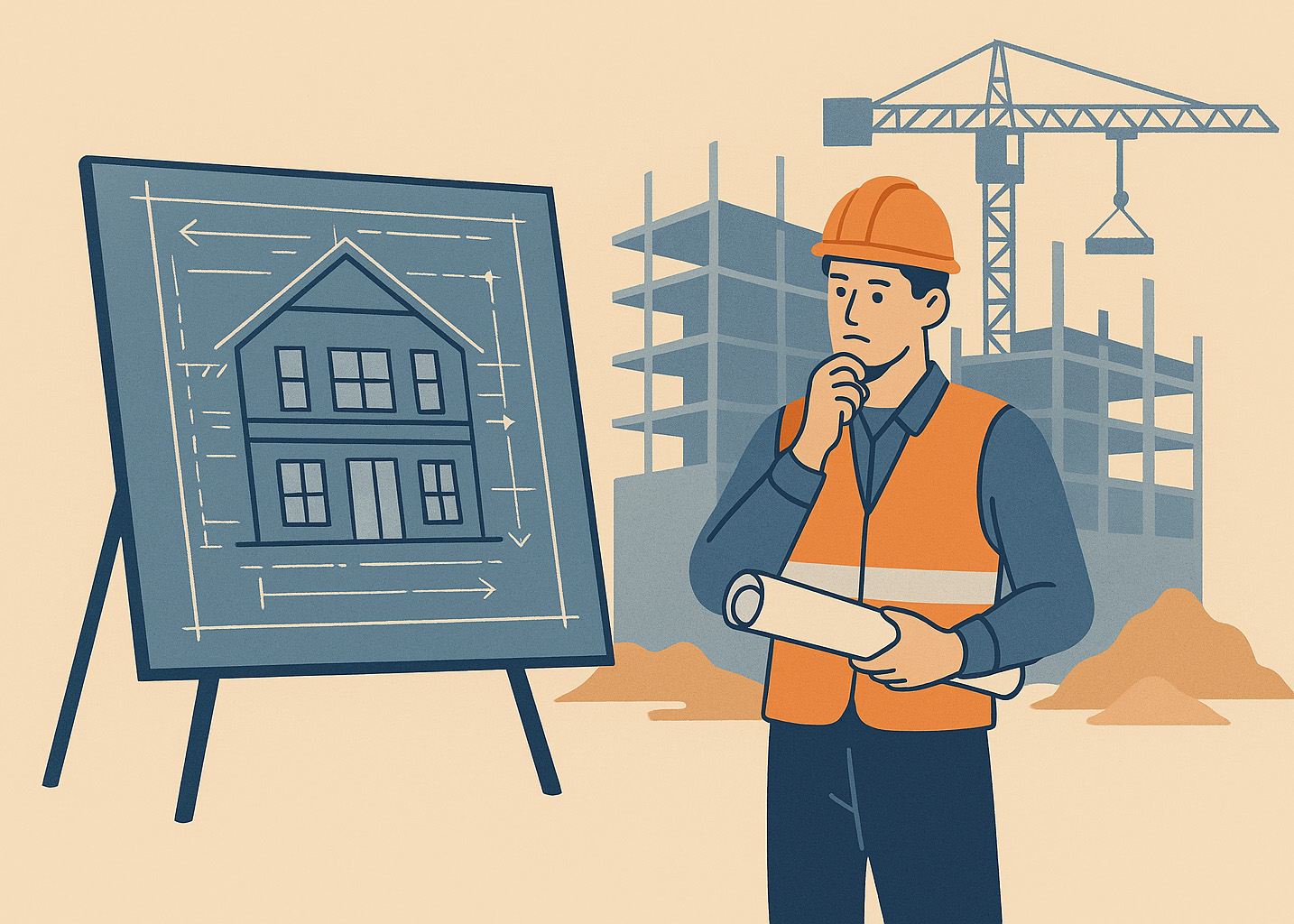
Most commercial designs involve multiple consultants working in parallel—architects, engineers, services consultants, fire safety, access, and sometimes specialist suppliers.
On paper, everything may appear finished. In practice, coordination gaps are common:
These issues rarely show up as obvious errors on drawings. They emerge during construction sequencing, when trades start asking questions the design did not fully resolve.
Post-contract, every clarification carries time, cost, and commercial risk.
Construction-ready documentation answers a different set of questions:
A design can be technically complete and still create unnecessary friction once construction starts—especially in live environments like offices, retail, or industrial facilities where shutdowns and staging must be tightly managed.
Buildability requires early construction input, not just design sign-off.
One of the most common assumptions in commercial projects is that design completion equals cost certainty. In reality, incomplete coordination and unresolved assumptions are the primary drivers of variations.
If design intent relies on allowances, provisional details, or deferred decisions, the contract value may look stable—but risk is simply postponed.
True cost certainty comes from reducing unknowns, not just fixing a price.
Approvals can create a false sense of security.
A design may be approved by authorities, but approval does not always equal compliance-ready construction. Fire engineering strategies, access provisions, services coordination, and as-built responsibilities often require detailed resolution during delivery.
If these elements are not fully integrated into construction planning, compliance issues surface late—during inspections or handover—when options are limited and pressure is high.
Design and Construct (D&C) models exist for a reason. When builders are involved early, construction readiness becomes part of the design process, not a problem deferred to site.
Early input allows:
This is critical for relationship-based projects, where repeatability and reputation matter.
A thorough handover does not begin at practical completion—it begins months earlier.
Asset registers, compliance documentation, commissioning requirements, and operational training all depend on decisions made during design and planning.
When these are treated as an afterthought, handover becomes rushed and incomplete—something clients notice.
Rather than asking whether a design is complete, better questions include:
These questions shift the focus from drawings to delivery certainty.
Most commercial projects do not fail because the design was poor—they struggle because the transition from design to construction was treated as a formality rather than a critical phase.
When construction readiness is addressed early, projects feel different: communication improves, variations reduce, handover becomes cleaner, and trust is reinforced.
If you are planning a commercial project and want clarity on whether your documentation is truly construction-ready, a structured design and construct review early can save months later.